


Building on 20 years of experience in the supply, installation and restoration of natural stone and slate flooring, Paul Coyle is determined to keep his business moving forwards.
What’s your background?
I’ve got more than 20 years’ experience, starting with basic tiling of kitchens, floors and conservatories. I still take on that work when requested. Ceramic tiling progressed to slate, travertine became popular then limestone came into fashion. In 2003 I made the decision to go self-employed. At first I was working all hours six or seven days a week to get established. I still do sometimes, if it’s needed, but I try to stick to normal hours.
When did you start restoring stone?
I initially started laying small stone floors, and it was just a progression. I did some training with a stone installer in Yorkshire, completed some training in London with a stone restoration company, and then with a repair company in Leicester too. This training covered aspects of crack repairs using colour matched resin, chips in stone, chips in granite work tops and full stone floor restoration. I then began making window sills and skirting boards. We also carry out full bathroom projects, from design through to installation and completion.
What’s your favourite part of your job?
That’s a difficult question to answer! I really do enjoy every aspect of my job, but stone restoration is now a passion of mine. To take a floor from a client which has become dull, with dirty grout lines which has lost its lustre and really makes the client frustrated, because maintenance is almost impossible. To hand it back looking clean, shining (if the stone is meant to) and easy to care for, really is a favourite part. The client falls back in love with the floor.
Do you have a favourite project?
Our work with Alnwick Castle is certainly a highlight – to work in such a prestigious building is a privilege. We go in each year to restore the floors in the public areas, to prepare them for the thousands of shoes that traipse over them during each visitor season. Our work initially in 2004 was restoration of existing floors, removing thick black bitumen used years ago as an adhesive and a damp proof membrane. More recent years see us caring for the stone, stripping, deep cleaning and resealing to protect the floors from staining and to ease maintenance. So yeah, Alnwick Castle stands out as a favourite.
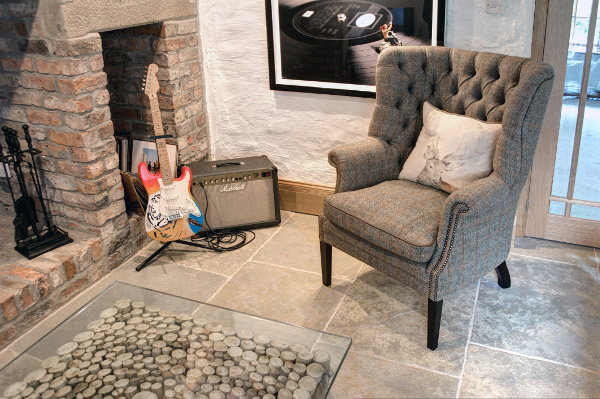
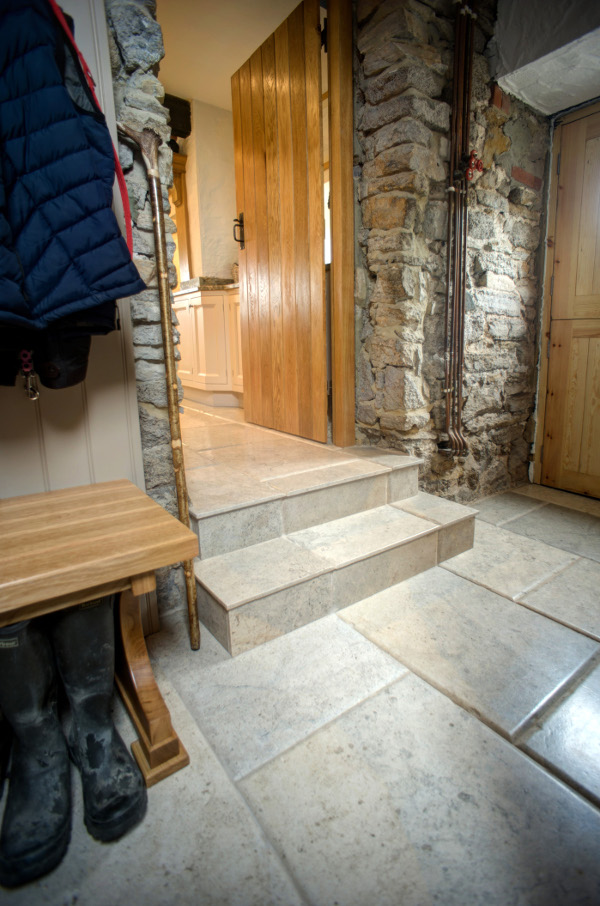
How have styles changed since you started out?
Twenty years ago it was generally four inch kitchen tiles or six inch white tiles. Some readers may be old enough to remember the patterned bathroom tiles that looked like a ducks head! Floor tiles were twelve inch square, then things started changing to rectangle, travertine made an appearance and now, porcelain and limestone floors are common place. Floors made such a statement to rooms and beautiful kitchens. Incidentally, we can clean ceramic and porcelain floors too and seven years ago we attended a training course for restoring Karndean and Amtico flooring so if potential clients have a worn, scratched or damaged Karndean or Amtico floor, we can fully restore those too. This isn’t just a dressing that wears off, this is a permanent polyurethane two coat system that is dry in two hours.
Tell me a bit about your work with Karndean.
I first saw Karndean laid in a property around 11 years ago and I was impressed that it was so neatly laid and set out. The more I looked in to it, the more I wanted to learn about it. After attending Karndean’s training school in Evesham, here we are 10 years down the line and many, many floors later. My colleague of 10 years, Neil Andrew, is Karndean’s training instructor. He has been a hard floor layer for 35 years and has just returned from Canada, teaching floor layers, new and old, new skills, products and sub floor preparation techniques, on behalf of Karndean International UK. He’s just finished the Harrogate floor show this month and then next week he’s off to Poland teaching. So between me, my son Regan (who has been with the business four years) and Neil, clients are in safe hands.
How important is it that you’re a family business?
I feel being a family-run business demonstrates to clients that we’re here to stay, and training Regan ensures that the business will continue hopefully long in to the future. It’s vital that good training is given and we often attend courses to keep up to date with new ideas and ways of working.
Where do you see the business going in the future?
We’re aiming to grow as a business and expand as we do. We’ve got areas we want to move into and new disciplines to learn – we’ve actually got training organised this winter. I again feel this is a natural progression for the business, and should be a reasonably easy transition.
